A Professional Training in Mindful, Somatic, and Experimential Coaching
Hakomi-Informed Somatic Coaching (HISC) Certificate
Applications for our 2027 cohort are now open.
Apply today, or sign up to be the first to receive new program announcements.
Hakomi-Informed Somatic Coaching Program (HiSC) is a professional training that brings the mindfulness-based, somatic, and relational principles of Hakomi into the practice of coaching.
This experiential online program teaches coaches to bring mindful attention to present-moment experience – including the body, emotions, beliefs and patterns that emerge within the coaching conversation. Participants develop both their own capacity for embodied presence and practical skills for supporting greater awareness, choice, and meaningful change in their clients.
Through Hakomi’s gentle, curious, and experiential approach, coaches learn to listen beyond the content of what a client is saying and become more attuned to how clients are experiencing themselves in the moment. Rather than interpreting, fixing, or directing, coaches learn to create conditions that support clients in discovering more about themselves and accessing their own wisdom.
HISC is designed for both experienced coaches who want to deepen their work through a somatic and mindfulness-based approach and newer coaches who want these principles to be part of their coaching foundation.
Will ICF CCEs be offered?
Hakomi-Informed Somatic Coaching is approved by the International Coaching Federation (ICF) as a Continuing Coaching Education (CCE) program. Participants who successfully complete the program receive 40 ICF CCEs. (34 Core Competencies, 6 Resource Development). CCEs can be used to apply for ICF Certification through the portfolio path.
Receiving ICF accreditation is a significant achievement that underscores our commitment to providing high-quality, ethical, and professionally designed coaching programs. This accreditation validates that our program adheres to the highest industry standards, equipping our coaching with the necessary skills, knowledge, and competencies to deliver exceptional coaching experiences.
The ICF accreditation process is rigorous, involving a thorough evaluation of our program’s structure, content, instructional methods, and alignment with the ICF’s stringent core competencies and code of ethics. By meeting these exacting criteria, we demonstrate our dedication to fostering an environment of continuous learning, growth and professional development for our coaches.
Learning Outcomes
What is Hakomi?
What is Coaching?
Coaching vs. Psychotherapy
HiSC will support you to:
- Apply core Hakomi principles and practices within a coaching framework.
- Deepen your somatic self-awareness so you can remain grounded and present in the coaching relationship.
- Track clients' verbal and nonverbal experience with greater sensitivity and curiosity.
- Bring mindful attention to patterns, beliefs, emotions, and embodied presence as they emerge in the present moment.
- Use experiential practice and mindful explorations to support client awareness and discovery.
- Develop a trauma-sensitive approach to coaching while maintaining appropriate scope and boundaries.
- Support client autonomy, choice, and access to their own inner resources.
- Join a community of coaches committed to mindful, somatic, and relational practice.
The Hakomi Method is a mindfulness-based, somatic approach to self-study that has been practiced around the world for more than 40 years. Rooted in the principles of mindfulness, nonviolence, organicity, mind-body holism, and unity, Hakomi offers a gentle and experiential way of exploring how we organize our experience.
Hakomi pays particular attention to what is happening in the present moment—our thoughts, emotions, bodily sensations, impulses, beliefs, and habitual patterns—and approaches all of these with curiosity rather than judgment.
These principles have powerful applications within coaching. They can help coaches slow down, listen more deeply, attend to the whole person, and support clients in discovering patterns and possibilities that may not emerge through conversation alone.
HiSC adapts selected Hakomi principles and practices specifically for use within the scope and ethical framework of professional coaching.
Here is how the ICF (International Coach Federation) defines coaching:
Partnering with clients in a thought-provoking and creative process that inspires them to maximize their personal and professional potential. The process of coaching often unlocks previously untapped sources of imagination, productivity and leadership.
ICF coaches see clients as the experts of their lives—naturally creative, resourceful and whole.
Partnering with a coach can change your life, setting you on a path to greater personal and professional fulfillment. Coaches will work towards your set goals and overcome the challenges that are intrapersonal. The coaching process will help develop self awareness and increase the capacity to take meaningful actions.
In HISC, we understand coaching as a collaborative process in which clients remain the experts of their own lives. The coach's role is not to diagnose, prescribe, or provide answers, but to create conditions that support awareness, learning, choice and movement toward what matters to the client.
How is Coaching different from Psychotherapy?
Both coaching and psychotherapy support clients in navigating the normal, and sometimes painful, ups and downs of the human condition. Both professions can help clients gain more clarity, take action, and feel more satisfied in their work and lives.
Psychotherapists have an additional role and responsibility as mental health clinicians. Psychotherapists are trained to diagnose and treat a wide range of clinical mental health conditions that are outside the scope of coaching.
Ethical coaches understand the boundaries of their scope of practice, recognize when a client's needs may be better served by a mental health professional, and develop trusted resources for consultation and referral.
Program Curriculum: 40-Hour Live Online Training
HiSC is a 40-hour live online program.
Teaching will be both didactic and experiential with practice groups in between each module. Please note that the curriculum is subject to change.
Step into the essence of what it means to be a coach—not just someone who “does” coaching.
- Ground yourself in the Hakomi principles of Mindfulness, Unity, Organicity, Mind-Body Holism, and Nonviolence, weaving them into the foundation of your practice.
- Cultivate loving presence and compassion to foster trust and safety, so clients feel seen, accepted, and supported.
- Learn the arc of the Hakomi-informed coaching process while embodying the qualities of a collaborative partner who supports awareness, learning and change.
Bring a trauma-informed lens to coaching with safety and care.
- Develop a trauma-informed coaching lens.
- Explore somatic resourcing practices that can support grounding and present-moment awareness.
- Practice Embodied Wisdom™ self-regulation and embodied presence.
Develop the art of listening to the body as deeply as you listen to words.
- Practice attuning to your client’s subtle physical cues, gestures, and shifts in embodied presence.
- Explore somatic tracking as a mindfulness practice for both client and coach.
- Deepen your ability to listen to the nonverbal realm of experience, where new awareness and insight can emerge.
Explore present-moment awareness as a foundation of Hakomi-informed coaching.
- Practice bringing attention to present-moment experience.
- Learn contacting practices that invite deeper awareness and exploration.
Bring mindfulness into every layer of your coaching.
- Cultivate relaxed, nonjudgmental awareness in yourself and support this quality of awareness in your client.
- Support clients in bringing mindful awareness to experiences that may not emerge through ordinary conversation.
- Practice simple yet powerful ways of inviting mindfulness into the coaching conversation.
Help clients explore beneath the surface with gentleness and curiosity.
- Practice inviting attention to the body as a pathway to insights, images, emotions, and other aspects of present-moment experience.
- Learn to recognize and explore beliefs and inner narratives as they emerge in the coaching process.
- Support clients in accessing their own inner resources through somatic practices.
Cultivate curiosity and experiential learning.
- Use mindful explorations to deepen awareness and invite new learning.
- Understand the purpose, principles, and intention behind mindful explorations.
- Practice somatic and experiential explorations that invite client discovery.
Meet barriers with curiosity and compassion.
- Deepen your understanding of common barriers and challenges that arise in coaching.
- Explore beliefs and patterns that may be limiting choice and possibility.
- Work with choice points to suggest greater awareness, clarity and choice.
Learn to recognize and support new possibilities as they emerge in the present moment.
- Learn to attune to the body as a source of insight, learning, and emerging possibility.
- Notice and support new experiences as they arise, opening space for greater freedom, choice, connection, and aliveness.
- Support embodied awareness so that emerging experiences can be noticed, explored and integrated.
Support insight to become embodied learning and meaningful action.
- Apply integration practices that help clients recognize and anchor their learning.
- Support mindful integration as clients move toward completion.
- Support clients in identifying practices and tangible actions that bring their learning into everyday life.
Close with intention and support what comes next.
- Practice intentional approaches to completion and closure.
- Integrate HISC skills through practice and real-world application.
HISC Faculty

Manuela Mischke-Reeds, MFT
Certified Hakomi Therapist and Trainer
Manuela Mischke-Reeds, MFT
Certified Hakomi Therapist and Trainer
Manuela Mischke-Reeds, MA, MFT, is a Certified Hakomi Therapist and Trainer, a licensed Somatic and trauma informed Psychotherapist. She trains health professionals in the Hakomi Method and Somatic Trauma Therapy internationally. She has worked as a Somatic Psychotherapist and Executive Coach in Silicon Valley for over 20 years. She is faculty at Embodylab Mind-Body Coaching and has integrated her extensive Somatic Psychology teaching and Trauma therapy practice into coaching and group leadership work.
She has been a faculty John F. Kennedy University, CIIS, and Sofia University (formerly the Institute of Transpersonal Psychology). She holds an MA in Somatic Psychology from California Institute of Integral Studies, and a BA in Dance Therapy from Naropa University and the University of Hamburg.
She has authored two books: 8 Keys to Practicing Mindfulness: Practical Strategies for Emotional Health and Well Being and Somatic Psychotherapy Toolbox: 125 Worksheets and Exercises to Treat Trauma & Stress.

Ketriellah Goldfeder
Certified Hakomi Practicioner
Ketriellah Goldfeder
Certified Hakomi Practicioner
Ketriellah Goldfeder is a Certified Hakomi Practitioner, International Coach Federation Accredited Certified Coach, Certified Trauma Informed Coach and Certified Mental Health Coach at Lyra Health. She served as a Jewish spiritual leader in Boulder, CO and as a Mindful Living Facilitator through Hebrew College’s Open Circle Jewish Learning.
As a lifelong learner, Ketriellah has immersed herself in the study and practice of Spiritual and Somatic wellness, including Jewish Wisdom Practices, Shiatsu, Hakomi, MatrixWorks - Working with Groups and Living Systems, Mindfulness-Based Stress Reduction, Mindfulness-Based and Somatic Coaching, Trauma Informed Coaching, Acceptance and Commitment Coaching and Restorative Yoga.
Ketriellah bridges worlds. She is a passionate pioneer in providing access to the tools of Hakomi within the burgeoning field of mental health coaching. She brings her warmth, authenticity and compassion wherever she goes.
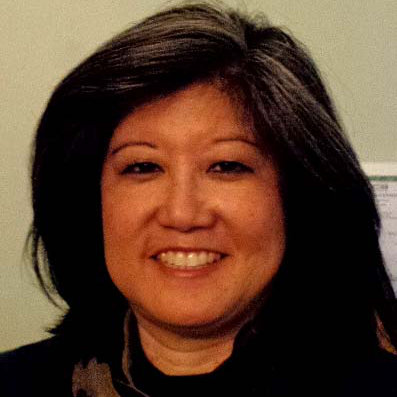
Emmy Akiyama, MA, LMFT
Certified Hakomi Therapist and Teacher
Emmy Akiyama, MA, LMFT
Certified Hakomi Therapist and Teacher
Emmy is a Licensed Marriage and Family Therapist (LMFT 51047) and Registered Art Therapist, with a private practice based in Southern California. She has experience in hospital and community mental health, as well as school-based settings, providing psychotherapy and case management services for a diverse portfolio of patients. Emmy has been studying Hakomi since 2016, and her appreciation for the Hakomi Method continues to deepen as she experiences how it powerfully transforms clients, as well as the beings of the practitioners themselves.

Melissa Grace
M.A., CHT Hakomi Trainer
Melissa Grace
M.A., CHT Hakomi Trainer
Melissa has been the director and lead trainer in over 30 Comprehensive Trainings and Advanced Supervision Trainings and hundreds of workshops over the last 35 years. She’s worked with thousands of clients in private practice, including individuals, couples, families, groups, and executive teams. First as a psychotherapist for several decades, and then as a personal and professional development coach. Melissa currently works with founders, leaders and executives toward deeper self-understanding and more authentic and connected leadership. Melissa is on the Hakomi Institute Board of Directors, has held an Adjunct Faculty position at Naropa University. She was a senior Course Leader for Authentic Relationship Trainings at the Boulder Integral Institute.
Melissa currently leads Levels 1 & 2 Comprehensive Trainings in collaboration with her team, and mentors new teachers and TA’s. She continues to design, innovate and teach all levels of training. She offers in person Advanced Supervision Intensives, online advanced supervision groups, and is currently developing a Mindful/Somatic Executive Coach Training. Melissa lives in Boulder, CO where she is finds deep nourishment in nature, music, and dance. She loves to learn, and cook, and celebrate life with her adult children and lifelong friends and colleagues. Her practice is a simple one of returning to presence and connection in the everyday moments of life.
Rupesh Chhagan
TCMP, CHP
Rupesh Chhagan
TCMP, CHP
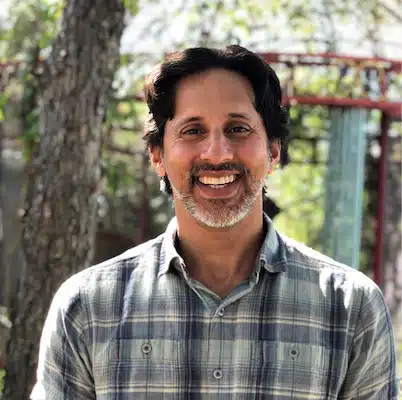
Rupesh Chhagan has been immersed in the healing arts and mindfulness-based practices for over 25 years. He holds a Master of Science in Traditional Asian Medicine and has practiced acupuncture and herbal medicine since 2003. Rooted in Taoist philosophy and holistic medicine, Rupesh’s early path led him into deep study of yoga and Buddhist mindfulness practices. As mindfulness became a central part of his life and work, he became increasingly interested in how to work skillfully with the unconscious patterns, emotions, and beliefs that arise in meditation and healing. In 2006, Rupesh began training in the Hakomi Method and was immediately captivated by its combination of gentleness, precision, and deep transformative power. Hakomi reveals the intimate connection between the body and our mental-emotional habits, creating the conditions for lasting change in the interdependent worlds of physiology and psychology. Rupesh became a Certified Hakomi Practitioner in 2010, a Hakomi Teacher in 2015, and a Hakomi Trainer in 2026. He served for over a decade on the faculty of AOMA School of Integrative Medicine in Austin, Texas, where he taught Hakomi theory and skills to acupuncture students. He has taught introductory Hakomi workshops, both online and in person, as well as two-year comprehensive trainings. He has also taught Hakomi fundamentals at Appamada, a contemporary Zen center in Austin, where the method was utilized as a way to work with what arises in meditation. As a brown-skinned Indian man and child of immigrants from apartheid South Africa, Rupesh is deeply aware of how social location and systems of oppression influence physiology and psychology. He supports individuals in their relationship to cultural wisdom as well as oppression. Rupesh also co-facilitates monthly online Hakomi BIPOC groups. Rupesh works with clients online and in person. In his in-person practice, he integrates Hakomi with Traditional Asian Medicine, offering holistic care that supports body, mind, and spirit. He lives in Nanaimo, on Vancouver Island, with his wife and young son.
Applications for our 2027 cohort are now open
Apply today, or sign up to be the first to receive new program announcements.